Workflows often limit performance. Make them a competitive advantage.
What is Workflow Intelligence?
Workflow Intelligence is sclable’s structured approach to analyzing, improving, and evolving workflows across teams, existing systems, and high-level decisions.
This allows you to understand precisely how work actually happens, why it breaks down, and how to improve it effectively. Once this clarity has been gained, it allows for the effective use of data, AI and automation (where it makes sense) to future-proof your workflows.
Where organizations are falling behind
Manual work (and rework)
Repetitive tasks and duplicate work drain capacity and introduce avoidable errors.
Limited transparency
Lack of visibility makes it hard to track progress, performance and real impact.
Rushed AI initiatives
AI is implemented without clear use cases, leading to wasted effort and low adoption.
Unclear handovers
Work breaks down between teams and when people leave, knowledge goes with them.
Unused data for decisions
Valuable data remains siloed or ignored, limiting insight and confident decision-making.
Siloed collaboration
Teams work in isolation, slowing decisions and creating misalignment across functions.
Where it delivers results
In many organizations, inefficiencies are not isolated. They run across processes, teams, and systems and affect how reliably work gets done. Workflow Intelligence makes these patterns visible and improves them in a structured way.
This leads to clearer processes, better decisions, workflows that scale, and AI initiatives that truly create competitive advantage.
Workflow Intelligence in action



Why this is becoming critical now
As expectations for speed, quality, and adaptability increase, improving how work gets done becomes a critical capability for organizations to remain competitive.
The faster the world moves, the more hidden inefficiencies cost an organization.
What improves when workflows perform better
From assumptions to evidence-based decisions
A connected view of data and execution makes the real picture visible. Decisions become faster and better aligned with what is actually happening.
From siloed processes to end-to-end visibility
Workflows, systems and teams are connected to show how work flows across the organization. Dependencies and bottlenecks become easier to see and act on.
From reacting to acting early
Risks, delays and inefficiencies surface earlier. This enables timely intervention and leads to more predictable outcomes.
From fragmented ownership to seamless continuity
Clear roles and transitions keep work moving without disruption. Critical knowledge stays within the organization.
From manual effort to operational efficiency
Repetitive work is reduced using automation and AI where it adds value. Existing systems are built on, improving execution without added complexity.
Three perspectives that make the difference
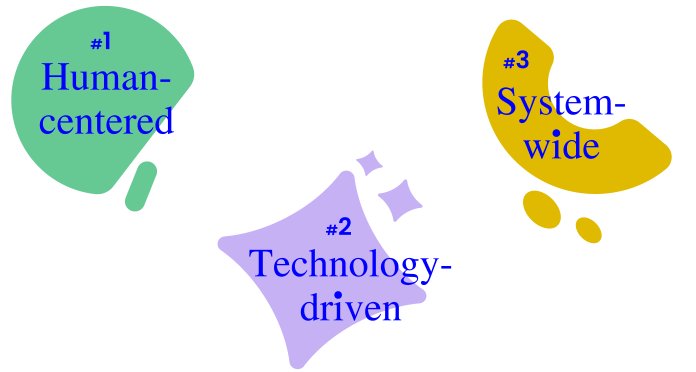
Human-centered: Start with how people actually work, not how processes are designed.
Technology-driven: Use data, automation, and AI where they create real value.
System-wide: Improve workflows end-to-end, not in isolated silos.
5 steps to Workflow Intelligence
Your point of contact
